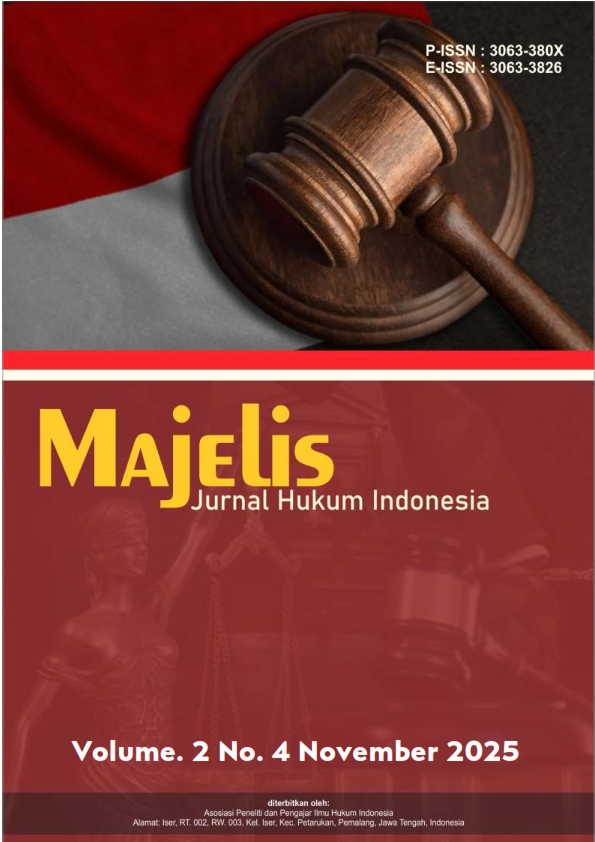
Kedudukan Hukum Atas Kecerdasan Buatan di Indonesia
DOI:
https://doi.org/10.62383/majelis.v2i4.1225Keywords:
Indonesia, Intelligence, Law, Object, SubjectAbstract
The development of artificial intelligence capabilities has the potential to facilitate the implementation of preventive measures. In order to mitigate potential risks, this study seeks to examine the legal status of artificial intelligence in Indonesia. The potential for artificial intelligence to function as both the subject and object of law is a salient factor in this analysis. The methodological approach employed is of a normative or doctrinal nature, emphasizing a comprehensive examination of the legal perspective on artificial intelligence. This study encompasses the objectives of progressive legal theory, the theory of legal subjects and objects, and the legal norms that apply in Indonesia. The results of the study indicate that in Indonesia, the prevailing legal framework regarding artificial intelligence (AI) currently categorizes it as an object of law. This implies that the owner, developer, and user of AI bear full responsibility for any consequences that may arise from its use. Advances in technology have led to the development of artificial intelligence capable of performing legal actions that were previously exclusive to humans. Consequently, the establishment of specific regulations pertaining to artificial intelligence is imperative to ensure legal certainty in the future.
Downloads
References
Al-Fatih, S. (2017). Model pengujian peraturan perundang-undangan satu atap melalui Mahkamah Konstitusi. Legality: Jurnal Ilmiah Hukum, 25(2), 247–260. https://doi.org/10.22219/jihl.v25i2.6005
Amboro, Y., & Khusuf, K. (2021). Prospek kecerdasan buatan sebagai subjek hukum perdata di Indonesia. Law Review, 21(2).
Astar, A., & Budi, S. (2022). Tanggungjawab kecerdasan buatan sebagai subjek hukum paten di Indonesia. Proceding Justicia Conference: Fakultas Hukum Suryakencana, 11.
Darus, M. (2022). Sistem hukum benda nasional. Bandung: Carey, PT. Alumni.
Halim, A. (2021). Hukum perseroan di Indonesia. Bandung: Nusamedia.
Kitab Undang-Undang Hukum Perdata.
Pasaribu, M., & Albert, W. (2022). Kajian akademik dan praktik artificial intelligence perspektif manajemen strategis. Jakarta: PT. Gramedia.
Peraturan Presiden Nomor 95 Tahun 2018 tentang Sistem Pemerintahan Berbasis Komputer.
Rahardjo, B. (2023). Teori etika dalam kecerdasan buatan. Semarang: Yayasan Prima Agus Teknik.
Rayendra. (2023). Kecerdasan buatan. Sumatera Barat: Mitra Cendekia Media.
Sihombing, E., & Muhammad, Y. (2020). Implementasi penggunaan kecerdasan buatan dalam pembentukan peraturan daerah. Jurnal Ilmiah Kebijikan Hukum, 14(3), 419–434. https://doi.org/10.30641/kebijakan.2020.V14.419-434
Teguh, J. (2023). Kecerdasan buatan (artificial intelligence). Semarang: Yayasan Prima Agus Teknik.
Undang-Undang Dasar Negara Republik Indonesia Tahun 1945.
Undang-Undang Nomor 10 Tahun 2004 tentang Pembentukan Peraturan Perundang-Undangan.
Undang-Undang Nomor 19 Tahun 2016 tentang Informasi dan Transaksi Elektronik.
Undang-Undang Nomor 28 Tahun 2014 tentang Hak Cipta.
Downloads
Published
How to Cite
Issue
Section
License
Copyright (c) 2025 Majelis: Jurnal Hukum Indonesia

This work is licensed under a Creative Commons Attribution-ShareAlike 4.0 International License.